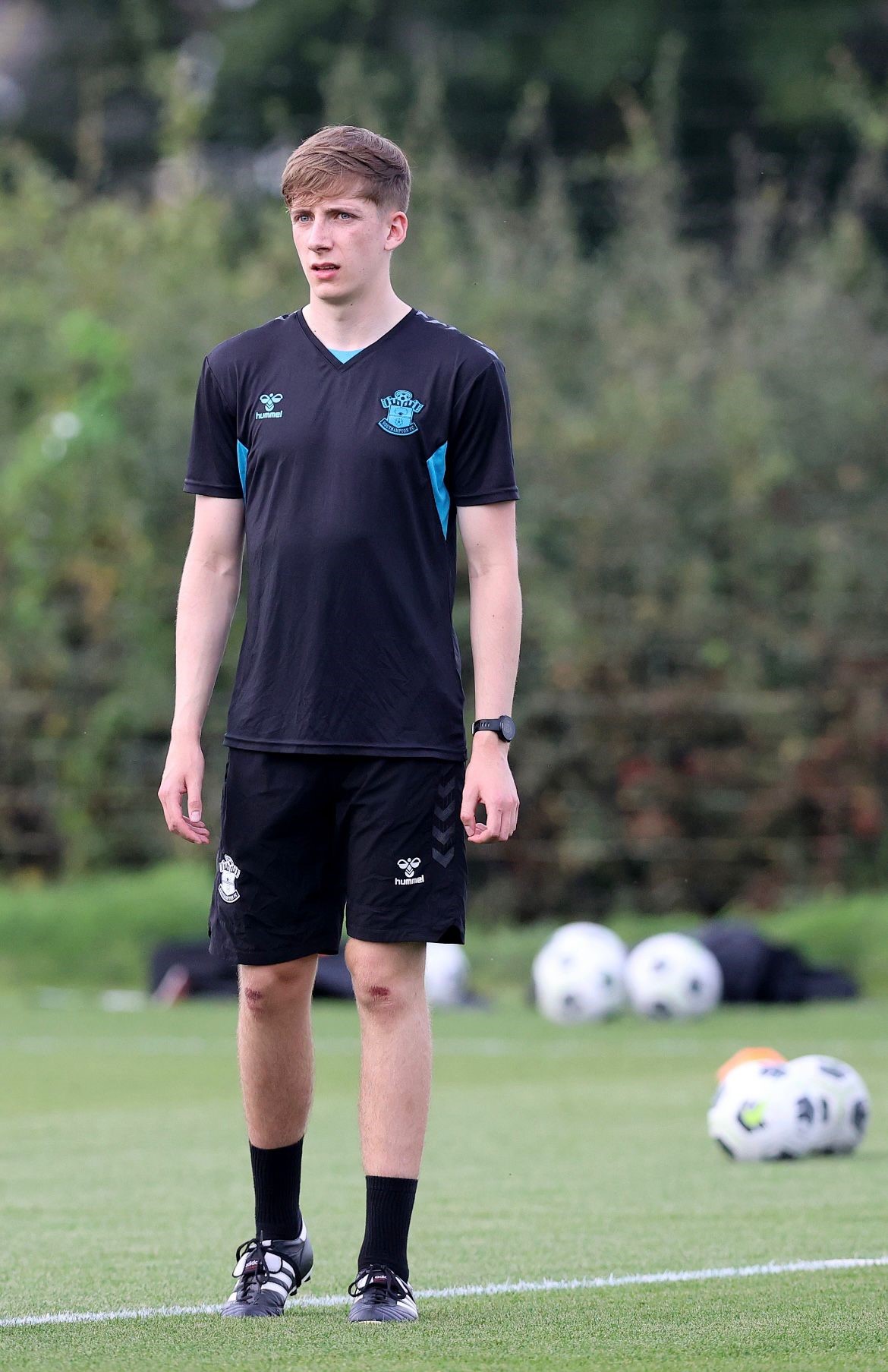
Jake Donohue, BSc Sport and Exercise Sciences Industrial Placement
Where did you do your placement year & what was your job role?
I completed my placement year at Southampton Football Club, working as a sports scientist within their academy. I supported youth players aged 9 to 21, helping to physically prepare them to meet the demands of elite-level football, with the aim for them to eventually progress into the first team.
Why did you decide to do a year in industry?
I was keen to apply the knowledge I’d gained during the first two years of my degree in a practical setting. Having previously played, watched, and volunteered in football, I felt it was the natural next step to gain practical experience and enhance my employability within the sport. It also provided a great opportunity to live in a new city and connect with others who shared similar interests.
What were your key responsibilities? How did these develop as your placement progressed?
At first, my responsibilities included assisting with gym and pitch-based sessions, collecting data, and supporting warm-ups. As I gained experience and confidence, I was trusted with greater responsibilities such as planning and delivering gym sessions, supporting injured players’ rehab plans, and contributing to discussions with the wider multidisciplinary team about player development and performance.
We want other students at Leeds to know what an exciting opportunity the year in industry is. What was the real highlight for you?
Travelling to Italy with one of the academy teams for an international tournament was a standout moment. It was eye-opening to see how other European academies operate and to experience football in a different cultural context. More broadly, seeing the development of players over the course of the season as athletes and individuals was incredibly rewarding. I look forward to seeing what they achieve during their careers.
Could you describe a typical day on your placement
Our contact time with the players typically ran from 4:00pm to 8:30pm, as they were in full-time education during the day. Time outside of this was used for planning and preparing sessions, completing sports science-related tasks, and analysing data. A typical evening involved gym-based physical development work, followed by a pitch warm-up to prepare the players for their football session. A key part of the role was working closely with technical and tactical coaches to ensure that players were exposed to an appropriate physical stimulus. I also worked regularly with injured players, supporting their rehabilitation and return to play.
What were your key responsibilities? How did these develop as the placement progressed?
At first, my responsibilities included assisting with gym and pitch-based sessions, collecting data, and supporting warm-ups. As I gained experience and confidence, I was trusted with greater responsibilities such as planning and delivering gym sessions, supporting injured players’ rehab plans, and contributing to discussions with the wider multidisciplinary team about player development and performance.
What advice would you offer to other students thinking about doing a year in industry?
Undertaking a year in industry has been the most impactful decision I’ve made for my personal and professional development. The experience, the people I worked with, and the responsibilities I was given made it hugely rewarding. I’d strongly encourage others to be proactive, seek opportunities early, and fully immerse themselves in the experience. Many of my friends who did placements would reiterate the same points!
What opportunities has your industrial placement opened up to you?
My placement has directly led to both a postgraduate opportunity and another role within football. The experience enhanced my CV and gave me valuable insights that I’ve been able to speak about in interviews. It also expanded my professional network and allowed me to build strong relationships within the industry. Employers clearly value candidates who have applied their academic learning in real-world settings, and the placement helped set me apart in a competitive field.